
Adhesive Backed Materials Ltd
Open Cell Polyurethane Foams


Open Cell PU Foams
Polyurethane foam is a versatile, lightweight cellular material that offers cushioning, support, and protection across a wide range of industries.
We work with several grades of polyurethane foam, including flame retardant polyether foam and high load bearing polyether polyurethane foam, allowing us to match the right specification to your application.
Material Properties and Benefits
Polyurethane foam combines a soft, resilient feel with a structure that recovers well after compression, making it suitable for both comfort and protective applications. The grades we stock are supplied in a dark grey colour and offer the following benefits:
-
Lightweight cellular structure that provides cushioning and impact absorption without adding significant weight.
-
Good compression recovery so the material returns to shape after repeated use, supporting a long service life in dynamic applications.
-
Flame retardant grades available, including foam that complies with the Furniture and Furnishings (Fire) (Safety) Regulations 1988 (as amended), BS 5852 Crib V, and UL94 HF1.
-
High load bearing options for packaging and support applications where the foam must hold heavier components without excessive deflection.
-
Strong fatigue performance, with grades classified to BS 3379 for use in repeated-load environments.
-
Consistent density and hardness across the sheet, providing a predictable feel and performance in finished parts.
Typical applications of Open Cell Foams
The combination of cushioning, recovery, and flame retardant options makes polyurethane foam suitable for a broad range of converted products. Typical end uses we produce for our customers include:
-
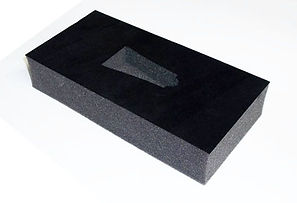
Protective packaging inserts and case foam for electronics, tools, instruments, and medical devices, where the higher load bearing grades support heavier items.
-
Seating, cushioning, and upholstery components for furniture, contract, and transport applications where flame retardant performance is required.
-
Gasket and sealing pads for enclosures, panels, and covers, where the foam takes up tolerances and provides a soft seal against dust and light contact.
-
Acoustic and vibration damping pads for cabinets, equipment housings, and automotive trim.
-
Display, point of sale, and presentation inserts, including trays that locate and protect retail products.
-
Composite parts that combine the foam with other materials we stock, such as plastic films, fabrics, or a flocked fabric finish, to deliver a higher quality look and feel in the finished product.


How we convert Open Cell Foams
We convert open cell foam materials using a range of machinery, selected depending on whether the material is supplied in sheet or roll form and the nature of the finished component required.
Die-Cutting
Using custom steel rule tooling, we stamp out components in a wide range of shapes from sheets or rolls. This is suited to gaskets, seals, pads, and shaped parts produced in volume.
CNC Knife Table
Complex profiles and large-format shapes are cut without the need for dedicated tooling, making it a cost-effective route for prototyping and lower-volume production.
Tape Laminating
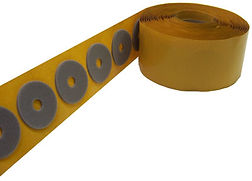
Pressure-sensitive adhesive is applied to foam materials using our tape laminating machine, producing peel-and-stick components ready for assembly without additional fixings.
Reel-to-Reel Slitting
For materials supplied in roll form, continuous slitting produces strips of defined widths for seals, weatherstripping, and other strip products.
Kiss-Cutting
Roll-form materials are cut through the foam while leaving the release liner intact, producing peel-and-stick parts on a continuous liner for easy dispensing and assembly.