
Adhesive Backed Materials Ltd
Closed Cell Foams


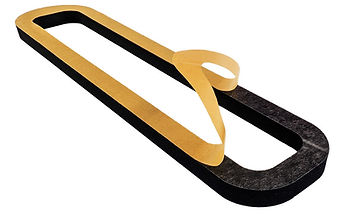


Closed Cell Foam Materials
We convert a range of closed cell foam materials to produce seals, gaskets, insulation, cushioning, and many other components. The closed cell structure — where individual cells are sealed — gives these materials low water absorption, resistance to moisture ingress, and good thermal insulation. We stock multiple foam types to suit different temperature ranges, firmness levels, and regulatory requirements.
Material Properties and Benefits
EPDM Foam
EPDM closed cell foam is available in densities from 70 to 330 kg/m³ across our range. It offers good resistance to UV radiation and ozone, making it well suited to outdoor and exposed environments. Operating temperatures range from −30°C to +100°C at constant use, depending on grade, with intermittent capability to +110°C. Water absorption is very low at 1–3%. Standard grades pass FMVSS302 flammability testing. A flame-retardant grade is available with UL94 HF-1 certification. All grades are CFC and HCFC free.
Polyethylene Foam (Cross-linked PE / LDPE)
We carry several grades of closed cell cross-linked polyethylene foam with densities from 15 to 100 kg/m³. The material has very low water absorption (less than 1%), resistance to a wide range of chemicals, and low thermal conductivity from 0.034 W/mK at 10°C. Maximum operating temperatures range from 85°C to 105°C depending on grade. A flame-retardant grade is available, approved to UL94 HF-1 and aviation specification CS 25.853 / FAR 25.853. The material is chemically neutral and recyclable.
Neoprene Foam
Neoprene closed cell foam is available at densities of 130–200 kg/m³. It offers good resistance to oil and weathering, with an operating range from −40°C to +100°C (intermittent). Compression set is very low — 1–3% at 25% compression after 24 hours recovery — making it well suited to sustained sealing applications. Both standard and flame-retardant grades are available; the FR grade passes UL94 HF-1 and FMVSS302. CFC and HCFC free.
PVC Foam
Available at 120 and 200 kg/m³, PVC closed cell foam provides a practical balance of flexibility and firmness across a −30°C to +70°C operating range. Both grades pass FMVSS302 flammability testing.
Elastomeric Foam – Kaiflex ST
Kaiflex ST is a closed cell elastomeric foam based on synthetic rubber (flexible elastomeric foam, FEF). It is designed specifically for thermal insulation applications, with a thermal conductivity of ≤0.033 W/m·K at 0°C and a water vapour diffusion resistance factor (μ) of ≥10,000, so no additional vapour barrier is required. Service temperatures span −50°C to +85°C. Fire performance is rated Euroclass B-s3,d0 to EN 13501-1 and Class 0 to UK Building Regulations, with UL94 V-0 and HF-1 approval. It holds marine classification from DNV and Lloyd’s Register. The material is fibre-free, resistant to mould and microbial growth, and free from cadmium, lead, and formaldehyde.
PORON® Polyurethane Foam
PORON 4701-series foam is manufactured by Rogers Corporation and available in Very Soft (4701-30) and Soft (4701-40) grades at densities from 240 to 480 kg/m³. It has an exceptionally low compression set — 2% maximum at 23°C — which means it reliably maintains sealing force over extended periods without permanent deformation. Recommended constant-use temperature is 90°C, with intermittent use to 121°C. The material resists UV, ozone, and mildew, and does not stain. It passes FMVSS302 and UL94 HBF flammability requirements.
EVA Foam – Pakcel
Pakcel is a closed cell ethylene vinyl acetate (EVA) foam at 100–110 kg/m³. It has a Shore C hardness of 40–45 and operates from −40°C to +80°C. It is well suited to cushioning and protective applications where good energy absorption is needed.
Silicone Foam
We convert silicone foam in several grades — from ultra soft to medium-firm — manufactured by Rogers Corporation (BISCO® series) and as a general-purpose closed cell silicone sponge (Grade 16). Silicone foam’s most distinctive characteristic is its very wide operating temperature range: down to −55°C to −60°C and up to +200°C at constant use, with intermittent capability to +250°C. This makes it suited to high-temperature sealing and insulation applications where other foam types cannot perform reliably.
Typical applications of Closed Cell Foams
The range of closed cell foam grades we convert is used in a wide variety of products across building, automotive, industrial, marine, and electronics applications, including:
-
Seals and gaskets for doors, windows, panels, and enclosures
-
Weatherstripping for buildings and vehicles
-
Thermal insulation strips and sections for pipework, ductwork, and HVAC systems
-
Vibration damping and acoustic pads
-
Protective packaging and cushioning inserts for fragile components
-
Self-adhesive foam components for direct assembly
-
Compression gaskets for electronics, battery packs, and electrical enclosures
-
Fire-rated seals for buildings and transport applications
-
Automotive sealing and trim components
-
Marine and offshore insulation components
-
High-temperature seals and gaskets for aerospace, automotive, and industrial equipment
-
Potable water system seals (WRAS-approved silicone grades)
-
Impact protection pads and underlays
-
Display, point of sale, and presentation inserts, including trays that locate and protect retail products.

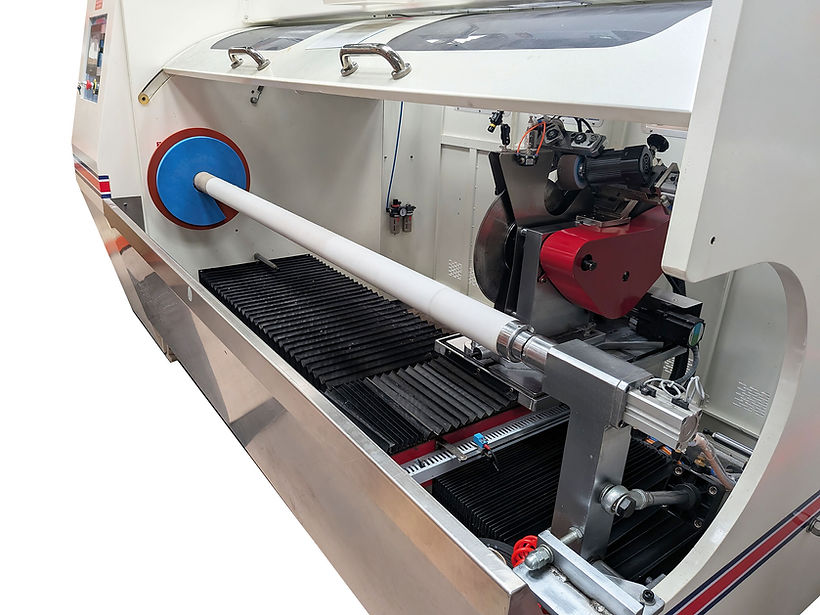
How we convert Closed Cell Foams
We convert closed cell foam materials using a range of machinery, selected depending on whether the material is supplied in sheet or roll form and the nature of the finished component required.
Die-Cutting
Using custom steel rule tooling, we stamp out components in a wide range of shapes from sheets or rolls. This is suited to gaskets, seals, pads, and shaped parts produced in volume.
CNC Knife Table
Complex profiles and large-format shapes are cut without the need for dedicated tooling, making it a cost-effective route for prototyping and lower-volume production.
Tape Laminating
Pressure-sensitive adhesive is applied to foam materials using our tape laminating machine, producing peel-and-stick components ready for assembly without additional fixings.
Reel-to-Reel Slitting
For materials supplied in roll form, continuous slitting produces strips of defined widths for seals, weatherstripping, and other strip products.
Kiss-Cutting
Roll-form materials are cut through the foam while leaving the release liner intact, producing peel-and-stick parts on a continuous liner for easy dispensing and assembly.