
Adhesive Backed Materials Ltd
Foam Bonding Tapes


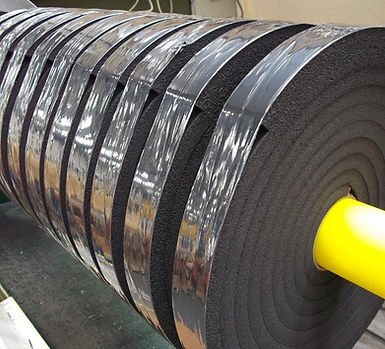
Foam Tape Range
We work with two distinct categories of foam tape: 3M VHB (Very High Bond) acrylic foam tapes, and our range of open and closed cell foam materials which we combine with adhesive tapes from our stock to produce custom foam tape products. Between these two categories we can meet a wide range of bonding, sealing, cushioning and environmental protection requirements.
3M VHB Acrylic Foam Tapes
3M VHB tapes are double-sided acrylic foam tapes that create strong, permanent bonds between two surfaces without mechanical fasteners. The acrylic foam core is viscoelastic, meaning it absorbs and dissipates energy rather than transmitting it. This gives VHB tapes the ability to accommodate vibration, differential thermal movement, and minor surface mismatches between the two parts being joined.
Available in thicknesses from 0.25 mm to 3 mm, and in conformable, very conformable and firm foam grades, VHB tapes can be matched to the surface profile and rigidity of the application. The adhesive bonds to metals, glass, a wide range of plastics, and many painted surfaces including powder coated finishes.
Key properties and benefits:
-
Replaces rivets, screws, spot welds and liquid adhesives, eliminating the need for drilling, grinding and surface finishing.
-
Creates a sealed joint that resists water and moisture ingress.
-
Keeps bonded surfaces smooth and clean with no visible fasteners.
-
The viscoelastic foam core provides vibration damping and stress relief across the bond.
-
Accommodates differential thermal expansion between dissimilar materials.
-
Excellent long-term durability with good resistance to solvents, moisture and a wide range of chemicals.
-
Short-term temperature resistance to 149°C; continuous service to 93°C.
-
Suitable for both indoor and outdoor applications.
Foam and Adhesive Tape Combinations
In addition to VHB tapes, we hold a range of foam materials that we laminate with adhesive tapes from our stock to produce foam tape products tailored to specific performance requirements. This gives us the flexibility to select the foam for its physical and environmental properties, and the adhesive for the bonding requirements of the application.
Our stocked foam materials:
Neoprene
Neoprene foam offers good resistance to weathering, ozone and general chemicals, combined with good physical toughness. It maintains its properties over a wide temperature range and is a practical choice where both sealing and mechanical durability are needed.
EPDM
EPDM foam has excellent resistance to UV light, ozone and outdoor weathering, making it a common choice for environmental sealing, weatherstripping and outdoor applications where long-term exposure to the elements is expected.
Poron (Microcellular Polyurethane)
Poron has very low compression set, meaning it reliably returns to its original thickness after compression over time. This makes it well suited to precision gasketing and sealing applications where maintaining a consistent seal under repeated or sustained load is important.
PVC/Nitrile
PVC/Nitrile foam is resistant to oils and fuels, making it the preferred choice in environments where hydrocarbon exposure is likely, such as automotive under-bonnet areas and industrial engineering applications.
PVC
PVC foam is a waterproof, flexible general-purpose foam. It provides a cost-effective option for sealing, cushioning and environmental protection across a wide range of applications.
Polyethylene
Polyethylene foam is lightweight and resistant to moisture, with good thermal and acoustic insulation properties. It is widely used in cushioning, protection and insulation applications.
Adhesive tape options for foam lamination include:
-
Acrylic permanent adhesive transfer tapes – clean, solvent-free bonding for a wide range of surfaces.
-
Tissue-backed adhesive tapes – high peel and tack strength for demanding bond requirements.
-
Scrim-reinforced adhesive tape – a modified acrylic adhesive specifically designed to bond to foam surfaces, including polyethylene, polyurethane and polyester-based foams.
-
High-temperature rated adhesive tapes – suitable for applications exposed to elevated temperatures, with service temperatures up to 120°C or higher depending on the tape selected.
-
Perm-peel tape – where one face of the foam tape must form a permanent bond and the other must remain repositionable.
The combination of foam type and adhesive tape can be matched to meet the specific bonding, sealing, temperature and chemical resistance requirements of each application.
Typical applications
Converting foam tapes into finished components opens up a wide range of applications across many industries. The following are among the most common end uses for the parts we produce.
Gasketing and environmental sealing
Die-cut foam tape gaskets are used to seal enclosures, panels, doors and access covers against water, dust and air ingress. Foam material selection – Neoprene, EPDM, PVC or PVC/Nitrile – can be matched to the environmental conditions the gasket will face, whether that is outdoor weathering, UV exposure or contact with oils and fuels.
Vibration damping and noise reduction
Foam tape pads and strips are used between components to isolate vibration and reduce transmitted noise. The viscoelastic nature of acrylic foam (VHB) and the resilience of polyurethane and neoprene foams absorb and dissipate energy, reducing the transmission of vibration through assemblies.
Structural and panel bonding
VHB foam tape is used to bond panels and components in place of screws, rivets and welds. This is common in signage, construction, transport, and electronics, where a clean surface finish is required and mechanical fixings are undesirable. The foam layer also accommodates thermal expansion and minor surface irregularities between the joined parts.
HVAC and ductwork sealing
Foam tape components are used to seal and insulate ductwork joints, access panels and pipe connections, keeping systems airtight and thermally efficient. EPDM and PVC foams are commonly used for this purpose.
Automotive trim and component bonding
Foam tape parts bond trim panels, badges, mirrors and other components to vehicle bodywork. PVC/Nitrile foam is used where parts may be exposed to oils and fuels, while VHB tape provides high-strength permanent bonding for exterior trim.
Electronics and electrical enclosures
VHB tape and Poron foam components are used for component mounting, gasket sealing and environmental protection of electronic assemblies and enclosures, where reliability and consistent compression over time are important.
Cushioning and surface protection
Cut foam tape pads protect surfaces from contact damage and provide a cushioning layer between components during handling, transit and in service. Polyethylene and PVC foams are frequently used for this purpose.
Thermal and acoustic insulation
Foam tape strips and pads are used to provide localised thermal insulation and to reduce noise transmission between surfaces, particularly in appliances, HVAC equipment and building construction.


How we convert Foam Tapes
We receive foam and adhesive tape materials on rolls, which allows us to use our full range of converting machinery to produce finished parts to your specification.
Tape Lamination
Where foam materials need an adhesive backing, we use our tape lamination machine to bond the chosen adhesive tape to the foam. This can be applied to one or both faces of the foam depending on whether the finished product requires single or double-sided adhesive. The choice of adhesive tape – from our range of acrylic transfer, tissue, scrim and specialist tapes – can be matched to the bonding and performance requirements of the application.
Die-Cutting
Using steel rule tooling, we die-cut foam tape materials into consistent shapes. Die-cutting is well suited to high-volume production runs of standard shapes such as gaskets, pads and strips.
CNC Knife Cutting
Our CNC knife table cuts foam tape material using a computer-controlled blade. This allows complex or irregular shapes to be cut accurately without the need for bespoke tooling, making it particularly suitable for prototypes, short runs and more complex profiles.
Kiss-Cutting
We can kiss-cut foam tape materials, cutting through the foam and adhesive layers without cutting through the release liner beneath. Parts remain on the liner sheet and can be peeled off individually at the point of use. This is a common format for gaskets, pads and adhesive-backed components used in assembly processes.
Reel-to-Reel Slitting
Our reel-to-reel slitting machine cuts wide rolls of foam tape down to precise narrower widths. This is used both to produce narrow foam tape rolls ready for direct use, and to prepare feedstock for further processing.
Lathe Slitting
Our lathe slitting machine offers an alternative method for cutting rolls to precise widths, and is capable of handling a wide range of foam thicknesses and roll sizes.